“W” Presidential Library – the inside edition

George W Bush Presidential Library is now in the planning stages. You’ll want to be the first at your corporation to make a contribution to this great man’s legacy. The Library will include:
-
The Hurricane Katrina Room, which is still under construction.
- The Alberto Gonzales Room, where you can’t remember anything.
-
The Texas Air National Guard Room, where you don’t have to even show up.
-
The Walter Reed Hospital Room, where they don’t let you in.
-
The Guantanamo Bay Room, where they don’t let you out.
-
The Weapons of Mass Destruction Room (which no one has been able to find).
-
The Iraq War Room. After you complete your first tour, they make you go back for a second, third, fourth, and sometimes fifth tours.
-
The Dick Cheney Room, in the famous undisclosed location, complete with shooting gallery.
Plans also include:
-
The K-Street Project Gift Shop – where you can buy (or just steal) an election.
-
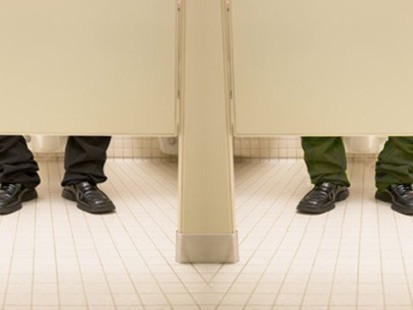
The Airport Men’s Room, where you can meet some of your favorite Republican Senators.
Last, but not least, there will be an entire floor devoted to a 7/8 scale model of the President’s ego.
To highlight the President’s accomplishments, the museum will have an electron microscope to help you locate them.
When asked, President Bush said that he didn’t care so much about the individual exhibits as long as his museum was better than his father’s.

Wow ! Newcomers make another impact
See The Spectacular 33 N. Main Renovation Thursday


What a difference in the building at 33 N. Main in Belmont from August to March!
And here’s your chance to see the renovation that owner Richard LaVecchia has achieved as the new Designing Brides and the relocated Peppermint Shoestring hold an open house and grand opening Thursday, March 13, from 10 AM until 7 PM.

Nancy Lepore, owner of Designing Brides, and Lynnelle Dobbins, owner of the Peppermint Shoestring Children’s Boutique, extend a special invitation to Chamber members and friends to come by between 5 p.m and 7 p.m. for tours and refreshments.
The building, which was once used as a funeral home, a clothing store, and most recently, a gift basket shop, will be a fine addition to the thriving downtown community.
Several neighbors and friends met Nancy Lepore and her husband, Patrick, last summer during the Friday Night Alive activities.
What Makes a Great City?
We thought you all might like to look through this check list. While we have a lot of things to work on , we all agree that YES, Belmont is very good already, and is “becoming” a great city.
This a reprinted article from Project for Public Spaces (PPS):
Is Your City a Great City?
Take a look around your town with this checklist, to see how it measures up.
By Ethan Kent and Kathy Madden
In Great Cities…
Community goals are a top priority in city planning
· Citizens regularly participate in making their public spaces better and local leaders and planning professionals routinely seek the wisdom and practical experience of community residents.
· Residents feel they have responsibility and a sense of ownership for their public spaces.
· Neighborhoods are respected, fostered and have unique identities. There is a sense of “pride of place.”
· Public spaces are planned and managed in a way that highlights and strengthens the culture of a particular community.
The emphasis is on pedestrians, not cars
· Pedestrians and bicyclists are more numerous than vehicles (on at least some streets).
· Streets function as “places” and have numerous attractive destinations along them.
· Transit options are available to get to places where people want to go and are used by all kinds of people.
· Parking does not occupy most of the public space; free parking is difficult to find.
· There is a walkable commercial center convenient to every neighborhood that provides everyday needs and services (grocery store, pharmacy, library, medical services, coffee shop etc.)
New development projects enhance existing communities
· New developments, both public and private, are designed to include mixed uses and to be easily reached without using a private vehicle.
· Developments are human scale and connect with places to cut through rather than mega scale, internalized and islands unto themselves.
· There is a mix of new housing types and layouts that allows and encourages people to grow old there.
Public spaces are accessible and well-used
· There are public places within both neighborhoods and downtowns where people can gather informally and regularly.
· Parks feature attractions for people of different ages and are used at different times of day; they are more than simply recreation facilities.
· The waterfront allows people to actually reach the ocean, lake or river.
· Amenities (benches, transit waiting areas, etc) are comfortable, conveniently located and designed to support the intended use.
· Negative uses or users do not dominate the public spaces.
· Both children and seniors can easily and safely walk to where they want to go (e.g. children can walk to school, seniors can walk to movies, grocery stores).
Civic institutions are catalysts for public life.
· Schools are centrally located to support other neighborhood activity.
· The library is a multi-purpose and popular place where people go for many different types of activities. · Civic institutions (museums, community centers, hospitals, government buildings, etc.) have resources and activities that appeal to people of all ages and all cultures in the community.
Local economic development is encouraged
· There are many locally owned businesses-markets, mom-and-pop stores, street vendors, and larger independent stores; these local businesses are encouraged by the city; people know their retailers by name.
· The mix of locally owned businesses is such that at least some of them are “third places” -places where people can just spend time.
· Local businesses work with schools to provide internships or part time jobs.
Public spaces are managed, programmed and continually improved.
· The public realm is managed to maximize community interaction and to facilitate public outcomes.
· Spaces are managed to provide opportunities for generations to mix.
 The Belmont Front Porch
