June Vandalism Rampage Nets Sentence for Two
The two young men who were arrested for vandalizing 76 cars and homes last summer, were sentenced on Friday.
Christopher Allen Bostwick, 19, of Belmont and Timothy Michael Pressley, 18, of Cramerton were sentenced to 200 hours of community service and required to pay restitution of $12,000.
Jail time was avoided by both men, many of the homeowners and/or insurance companies wanted to be reimbursed for the damages. The reasoning was that if the men were jailed, they would not be able to pay back the damages.
The judge threatened both offenders that if they were caught in as much as a moving violation, they would be sent to jail.
Guess that wraps up the justice in their destructive silliness…

City Council Action

Last night’s city council meeting (January 7, 2008) was adequately attended by citizens and public workers.
The council approved the consent agenda which had a section dealing with the sewer upgrades in the “south outfall” area (near Amity Acres/Pinsto). An 18″ pipe would be installed that should be able to service a population of 35,000 in the peninsula area below the High School. Looks like the engineers are thinking way ahead.
Retired Firefighter, Robert Steve Hubbard, was recognized by the NC League of Municipalities for 36 years of service to Belmont. Richard Boyce made the presentation to a standing ovation by the crowd. Chief Altice took pictures.
During the public comment section, a gentleman who lives on Oak Street requested the city look into the cut-through traffic that people are using to bypass the crowded Central Avenue at busy times. People are turning down Harris Street (next to Charlie Martin’s house) and turning back up the hill onto Oak to bypass the stoplights at Myrtle/Central and Central/Main. He commented that, “…people are traveling in excess of 60 miles per hour up the hill…”. Council referred the man to Chief James for further discussion.
A representative from the Belmont Housing Authority updated the council on the Housing Authority activity. Council member, Martha Stowe was a member of that board, but had to resign upon election to City Council. There are two vacancies on the housing Authority Board. The mayor appoints the board. Mayor Boyce indicated that applications from interested participants could be directed to the Housing Authority. (P.O. Box 984, Belmont).
There was a text amendment to the Business Campus Development District. this would allow a business to have a drive-through window in this zoning designation as a conditional use. The purpose of the amednment was to accomodate Belmont Federal’s planned move to the corner of Planetree and Park Street (the old laundry/Backyard BBQ and adjacent lots) that were rezoned at the last council meeting.
There was a lengthy presentation and discussion to rezone a GR-4 piece of property at the river’s edge above the rail trestle to Business Campus Development/Conditional District to accomodate the Dickson and Whaley family requests to build a 42-slip marina and convenience store.
Piedmont Road property owners presented a petition to make sure that the road which is already fenced off at the old Spectrum plant, remain fenced off. Several residents of Edgemont were also in attendance and expressed concerns about traffic on the narrow roads of Edgemont, Linestowe, and River Road. Property rights advocate, Charlie Flowers, added language to the conditional use that no liquor be allowed or amplified music, except for special events. Once the property lines were established and the developer answered all the questions of council members, an affirmative vote was taken.
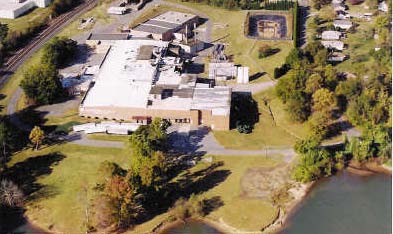
The photo above shows the property that was requesting a rezone. The longest discussion revolved around the section of the photo from the left of the flat area to the little “beach area”. Apparently city and county maps do not show this as existing land, or that the land is withing County jurisdiction. The store, boat landing would built closer to the River Road in the cove area. The aluminum-covered boat slips (42 of them) would be built in the foreground of the photo.

City council members also added language to allow for the development of a greenway along this property. It is unknown how that will work – property rights and all, you know. the drawing above shows the “added” land area under jurisdictional questioning. Longtime Belmontians know that the “added” land was ash and landfill over a long period of time. Many a great party was held in the picnic shelter and along the riverbank over the years.
The anticipated big discussion of the evening, non-contiguous voluntary annexation of 55 acres with proposed access to Lower Armstrong Ford Road and South Point Road was withdrawn by the property owners. The council voted to continue the public hearing of the project until the February meeting.
Todd Neely and the architect for the Riverfront Park presented the final master plan for the new park down along East Catawba. The Belmont Front Porch had previously reported that work is progressing with the demolition of the two houses just behind Dale’s. The final plan shows a boardwalk with a small landing to launch paddle boats. A lot of green space and trails. The island, being referred to as “Irl’s Island” or Gilligan’s Island, — in reference to former council member, Irl Dixon, who has championed the acquistion of the island for a long time — was now included in the plan with “nature trails” weaving through the space. Council was asked to approve the Parks and Recreation Trust Fund (PARTF) grant application for a 50% match of a $1,000,000 project. Belmont would provide $500,000 and the State’s park trust fund grant would match this amount. A detailed budget was provided to the council members. Council approved the grant application.

In other business, defeated council candidate, Richard Turner, was appointed to the Parks and Recreation Advisory committee to replace Jenny Granson who had resigned. Only two people has applied for the slot, with one person being disqualified because they lived outside the Belmont ETJ ( go figure).
Council also rearranged their committees and heard from the various council members of their special interest concerns. City Manager Barry Webb reported that city staff are encouraging the development of a Tree Committee and participation in the Tree City, USA program.

Can Walk Score Improve the Value of Your Home?

We previously reported that Belmont has the best “Walk Score” in Gaston County, (10/29/07), here is another take on the impact of sidewalks and walkable community values from Realty Times:

Just imagine, your real estate agent is showing you a print out from the Multiple Listing Service of a home you might want to buy. On the sheet is something you’ve never seen before.
“Our hope would be that eventually it’s something that is in the MLS, where it says ‘Two bedroom, two bathroom, 1,000 square feet, Walk Score of: 80,'” says Matt Lerner, co-developer of a website called Walk Score.
While the MLS doesn’t yet offer this feature, creating a Walk Score for a particular property is a concept that Lerner and a couple of other technology colleagues (Jesse Kocher and Mike Mathieu) developed after realizing that how walkable an area is, rates high for consumers.
“We got interested in the benefits of walkable neighborhoods partially due to a nonprofit in Seattle called the Sightline Institute which had done so much writing on all the benefits of walking,” says Lerner.
Lerner says some of the benefits were obvious, such as walking is good exercise and helps to reduce environmental pollution.
“But then there were some non-obvious benefits, such as walking is really good for communities because you’re out in your neighborhood, you’re talking to people, you’re meeting people. Walkable neighborhoods are also good for local businesses because, rather than driving to one place, you can stop and walk around and look at all the little stores. So it’s a good way to support local businesses and local culture too,” says Lerner.
So the developers set out to create a website that measures the walking score for home locations. Walk Score.com launched in the summer and in just four weeks got one million visitors wanting to know a property’s Walk Score. Using Google Maps and business listings, the site computes a Walk Score for any address in the United States and Canada. It bases the points assigned on the distance to local amenities and then averages the score. Then for the fun of it, visitors can compare their scores to that of famous locations and people such as Bill Gate’s house, Fenway Park or Jennifer Anniston and Brad Pitt’s (pre-divorce) home.
Lerner says that since the site launched they have received lots of emails from users saying that walkability is the number one priority they focus on when buying a house.
“I know in Seattle, for example, a lot of people work at Microsoft, which is in Redmond, so they commute to work but, for where they live, especially if they have kids or a family, having things they can walk to is really important and then for younger folks being able to walk to a bar or a coffee shop is important. Walk Score is a really simple way to see what’s in the neighborhood near the property you’re looking at,” says Lerner.
However, Walk Score doesn’t take into account things such as lakes or other roadblocks that might force someone to take a different route to get to the destination.
“What Walk Score does is fairly simple. We measure whether you can get to the types of businesses that consumers want and then we base a score on that,” says Lerner.
Lerner says creative real estate agents and homeowners are using it to help sell homes.
“One of the really fun things on the Internet has been that people are comparing their scores and bragging about them. A big, new condo in Seattle put up a huge Walk Score banner on the front that said Walk Score 100 and they used that banner as a marketing tool because they think that, for urban condos, walkability is one of the selling points,” says Lerner.
Buyers are using Walk Score to help determine which house better suits their needs.
“We’re seeing people actually comparing different properties and if a place gets a low Walk Score, someone can say, ‘Oh, wow I didn’t realize I couldn’t actually walk to the grocery store if I bought this house but if I buy this other one, I can walk to all these amenities,'” says Lerner.
Lerner says real estate agents see Walk Score as another way to help sell a property and, “in a down-real-estate market you need all the selling points you can get.”
 The Belmont Front Porch