TIF Turns Gaston Into River City
Tax Increment Financing has turned Gaston County cities and towns into the real life example of the movie version, “The Music Man”:
A con artist, “Professor” Harold Hill, comes to a small Iowa town in the early 1900s. He convinces the town that it needs a marching band, taking orders for the necessary instruments and uniforms. He also sells music lessons in advance, concealing the fact that he cannot read or play a note of music. In the process Professor Hill galvanizes the town out of its torpor and falls in love with the local librarian/music teacher. The movie is the original setting for “Seventy-Six Trombones” and “Till There Was You.”
We’ve got Trouble… Right here in River City…

An article in the Charlotte Oberserver reports that County manager, Jan Winters has bought into “Big Plan” Jim Palenick’s endorsement of the Big League Dreams program. Where did $23,000 to “study” the project come from? Another tap into the Tourism funds from the hotel/motel tax?

Another trip down the route of issuing municipal bonds without voter approval.
Isn’t “Big Plan” the same guy who questioned the Whitewater Park investment by Gaston area communities? Didn’t Mr. Winters have a dickens of a time dealing with the fallout of the failed Equestrian Center and county finances.
So, what are the differences?
Big League Dreams is a for-profit development firm that primarily builds baseball fields with the target area’s local money, and takes 50% of the profits (if there are any). The project is being sold throughout the United States as a way for cash-strapped communities to have “world class” athletic facilities.
The “target communities” are generally areas that have small parks and recreation budgets — if any at all –, are in areas of unrealized potential — along major highways/transportation corridors, and have attention starved local politicos. Several communities that bought into this project have already had to raise entrance fees — yes, parking/viewing — to meet the for-profit operating budget. Captured events, such as Legion Baseball, the Grizzlies, and any planned event, will have to charge an arm-and-a-leg to meet breakeven points. What guarantees are made by Big League Dreams if the community couldn’t attract major regional or national events?
NONE —
This particular group is asking — demanding, actually (by the business model) — that the target community do the local site research, commit to the fund the construction, and guarantee the construction loan. Then they operate the facilities, and “split” the profits of the facility. The big kicker is that they MUST be able to sell alcohol in their parks. So in essence, the City (and County) in this scheme, want to get a piece of the alcohol sales and profit off of youth sports.
The passage of the Tax Increment Finance law in 2004, has allowed the traveling saleman to flood North Carolina communities with big visions and bigger ideas. Jim “Big Plan” Palenick and Big League Dreams blew in with this passage.
The US National Whitewater Center is a one-of-a-kind, locally volunteer-driven, non-profit organization. It is a planned out, unique destination place that has not yet been duplicated. Significant private investment was pledged and committed PRIOR to public investment.
The community investment in the USNWC is guaranteed by the public investment of tax dollars, which will be tapped this fiscal year, and probably for the next two consecutive years. Is it a lot of money?
In our opinion, sure, but at the same time it is less than the $18 million proposed for the Baseball fields. It is less than the proposed $12.5 million for downtown Gastonia’s “renovation”. For the USNWC, a total of $2.5 million was invested by the Gaston communities (Gastonia, Belmont, Mt. Holly) in the $35 million project.
Was there, or is there, a payback from the Whitewater Center? This past summer, the first year of operation, over 50% of the staff were from Gaston County. Primarly college students and young adults. Several events attracted a world-wide audience and visitors, many of whom stayed in the Holiday Inn Express at exit #27. The center attracted over 400,000 visitors — yes, free, mostly curiousity visitors, many more than the 300,000 anticipated.
So far, the “Big Plan” Jim Palenick public endorsement tally is over $30 million. We have to ask, what is next ?
This traveling salesman scores bigtime in Gaston County. “Big Plan” also scored in Bay City, Michigan and Rio Rancho, New Mexico prior to blowing into Gastonia.
City Council Action

Last night’s city council meeting (January 7, 2008) was adequately attended by citizens and public workers.
The council approved the consent agenda which had a section dealing with the sewer upgrades in the “south outfall” area (near Amity Acres/Pinsto). An 18″ pipe would be installed that should be able to service a population of 35,000 in the peninsula area below the High School. Looks like the engineers are thinking way ahead.
Retired Firefighter, Robert Steve Hubbard, was recognized by the NC League of Municipalities for 36 years of service to Belmont. Richard Boyce made the presentation to a standing ovation by the crowd. Chief Altice took pictures.
During the public comment section, a gentleman who lives on Oak Street requested the city look into the cut-through traffic that people are using to bypass the crowded Central Avenue at busy times. People are turning down Harris Street (next to Charlie Martin’s house) and turning back up the hill onto Oak to bypass the stoplights at Myrtle/Central and Central/Main. He commented that, “…people are traveling in excess of 60 miles per hour up the hill…”. Council referred the man to Chief James for further discussion.
A representative from the Belmont Housing Authority updated the council on the Housing Authority activity. Council member, Martha Stowe was a member of that board, but had to resign upon election to City Council. There are two vacancies on the housing Authority Board. The mayor appoints the board. Mayor Boyce indicated that applications from interested participants could be directed to the Housing Authority. (P.O. Box 984, Belmont).
There was a text amendment to the Business Campus Development District. this would allow a business to have a drive-through window in this zoning designation as a conditional use. The purpose of the amednment was to accomodate Belmont Federal’s planned move to the corner of Planetree and Park Street (the old laundry/Backyard BBQ and adjacent lots) that were rezoned at the last council meeting.
There was a lengthy presentation and discussion to rezone a GR-4 piece of property at the river’s edge above the rail trestle to Business Campus Development/Conditional District to accomodate the Dickson and Whaley family requests to build a 42-slip marina and convenience store.
Piedmont Road property owners presented a petition to make sure that the road which is already fenced off at the old Spectrum plant, remain fenced off. Several residents of Edgemont were also in attendance and expressed concerns about traffic on the narrow roads of Edgemont, Linestowe, and River Road. Property rights advocate, Charlie Flowers, added language to the conditional use that no liquor be allowed or amplified music, except for special events. Once the property lines were established and the developer answered all the questions of council members, an affirmative vote was taken.
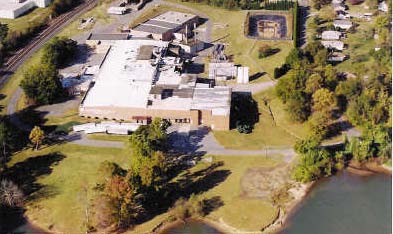
The photo above shows the property that was requesting a rezone. The longest discussion revolved around the section of the photo from the left of the flat area to the little “beach area”. Apparently city and county maps do not show this as existing land, or that the land is withing County jurisdiction. The store, boat landing would built closer to the River Road in the cove area. The aluminum-covered boat slips (42 of them) would be built in the foreground of the photo.

City council members also added language to allow for the development of a greenway along this property. It is unknown how that will work – property rights and all, you know. the drawing above shows the “added” land area under jurisdictional questioning. Longtime Belmontians know that the “added” land was ash and landfill over a long period of time. Many a great party was held in the picnic shelter and along the riverbank over the years.
The anticipated big discussion of the evening, non-contiguous voluntary annexation of 55 acres with proposed access to Lower Armstrong Ford Road and South Point Road was withdrawn by the property owners. The council voted to continue the public hearing of the project until the February meeting.
Todd Neely and the architect for the Riverfront Park presented the final master plan for the new park down along East Catawba. The Belmont Front Porch had previously reported that work is progressing with the demolition of the two houses just behind Dale’s. The final plan shows a boardwalk with a small landing to launch paddle boats. A lot of green space and trails. The island, being referred to as “Irl’s Island” or Gilligan’s Island, — in reference to former council member, Irl Dixon, who has championed the acquistion of the island for a long time — was now included in the plan with “nature trails” weaving through the space. Council was asked to approve the Parks and Recreation Trust Fund (PARTF) grant application for a 50% match of a $1,000,000 project. Belmont would provide $500,000 and the State’s park trust fund grant would match this amount. A detailed budget was provided to the council members. Council approved the grant application.

In other business, defeated council candidate, Richard Turner, was appointed to the Parks and Recreation Advisory committee to replace Jenny Granson who had resigned. Only two people has applied for the slot, with one person being disqualified because they lived outside the Belmont ETJ ( go figure).
Council also rearranged their committees and heard from the various council members of their special interest concerns. City Manager Barry Webb reported that city staff are encouraging the development of a Tree Committee and participation in the Tree City, USA program.

“Keep It Clean, We All Live Downstream”
The new brochure given out by the City of Belmont Stormwater Management program. Came in the mail with the water bills:
belmont-stormwater-management-flyer.pdf
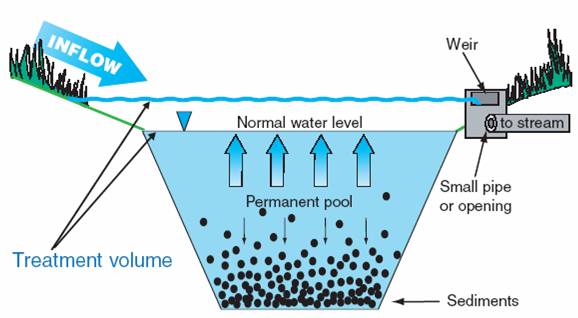
(How a stormwater detention pond works)
Yes, one of the unfunded federal mandated programs that the cities were left to figure out how to fund and enforce.
epa-fact-sheet-on-stormwater-technology.pdf
Well, really, to be fair, there have been some funding “streams” from the feds and state that cities can “match” with local efforts.
But, Belmont and other communities got most of it right by the use of Stormwater Fees and better planning methods to retain runoff caused by new development. Impact fees have also helped, but as much as communities raise those fees, developers keep proposing projects.
Good planning (which Belmont is getting better at year-by-year) and tightening the local ordinances are helping to slow the runoff caused by development within the watershed area of the Catawba and South Fork rivers. With urbanization — heavens, that’s happening here? — comes the effects that run down the street, into the sewers, and directly into the rivers.
Well, many of us purchased homes that have been here since back in the day… and like it or not, we need to help try to keep our drinking water source as clean as can be for everyone – yup, even the dreaded newcomers. Wouldn’t be neighborly if all of a sudden the new people in them rich houses started to get sick on a count of our grass clippings making algae around the intakes now would it?
Go on back up in the article to read about ways we all can help to keep our runoff cleaner. We particularly like the suggestion #2, Washing Your Vehicle. the flyer suggests that we pull the car onto the lawn to wash, where the soapy water will fall on the grass and be filtered as it drains. It won’t harm the lawn it suggests. Well, what happens if you don’t have much yard? – like in Hawthorne or Adams Bluff – and, what about the ruts in the lawn?
Oh well, don’t have to worry ’bout that right now – we are NOT supposed to be washing cars anyway because of the DROUGHT. Oh, of course, it’s ok if you have an irrigation well though, right – Eagle Park, Graystone, Belle Meade, and Glenmere?


Anyway, We all need to do our best to help the stormwater management process work — for our health, and for the health of our neighbors downstream as well.
Fun source of information on stormwater management processes, just click on the picture under the linked article.
 The Belmont Front Porch